Categories
Computer Vision Deep Learning Diabetes Eyes

Diabetic retinopathy-detecting algorithm for remote diagnosis

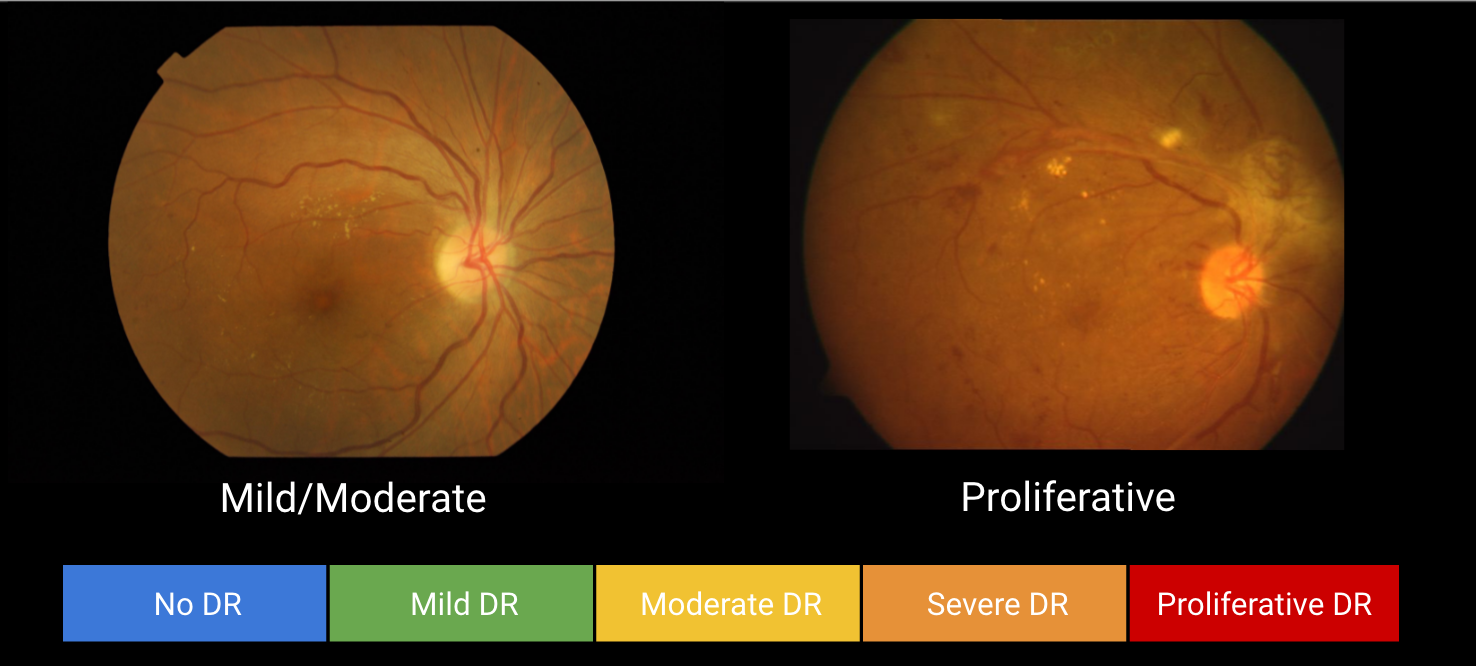
Google has developed an algorithm which it claims is capable of detecting diabetic retinopathy in photographs.  The goal is to improve the quality and availability of screening for, and early detection of,  the common and debilitating condition.

Typically, highly trained specialists are required to examine photos, to detect the lesions that indicate bleeding and fluid leakage in the eye. This obviously makes screening difficult in poor and remote locations.

Google developed a dataset of 128,000 images, each evaluated by 3-7 specially-trained doctors, which trained  a neural network to detect referable diabetic retinopathy.  Performance was tested on two clinical validation sets of 12,000 images. The majority decision of a panel 7 or 8 ophthalmologists served as the reference standard. The results showed that the accuracy of the  Google  algorithm was equal to that of the physicians.


ApplySci’s 6th   Wearable Tech + Digital Health + NeuroTech Silicon Valley  –  February 7-8 2017 @ Stanford   |   Featuring:   Vinod Khosla – Tom Insel – Zhenan Bao – Phillip Alvelda – Nathan Intrator – John Rogers – Roozbeh Ghaffari –Tarun Wadhwa – Eythor Bender – Unity Stoakes – Mounir Zok – Krishna Shenoy – Karl Deisseroth – Shahin Farshchi – Casper de Clercq – Mary Lou Jepsen – Vivek Wadhwa – Dirk Schapeler – Miguel Nicolelis
Categories
Sensors Sleep Wearables

Cabin sensors, wearables, smart pills to monitor air passenger health

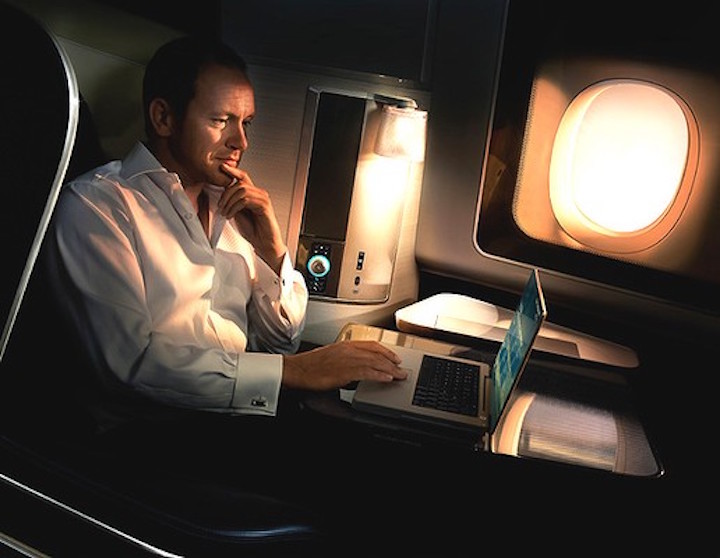
British Airlines has filed a patent application for a system that would monitor when a passenger is awake, asleep, hungry, nervous, hot, cold or uncomfortable.

The “system and method for controlling the travel environment for a passenger” encompasses motion-sensing sleep monitors, wearables that track eye movement, heart rate, and temperature, and ingestible health-tracking pills.

The company aims to use the data to optimize a passenger’s environment/experience while flying.


ApplySci’s 6th   Wearable Tech + Digital Health + NeuroTech Silicon Valley  –  February 7-8 2017 @ Stanford   |   Featuring:   Vinod Khosla – Tom Insel – Zhenan Bao – Phillip Alvelda – Nathan Intrator – John Rogers – Roozbeh Ghaffari –Tarun Wadhwa – Eythor Bender – Unity Stoakes – Mounir Zok – Krishna Shenoy – Karl Deisseroth – Shahin Farshchi – Casper de Clercq – Mary Lou Jepsen – Vivek Wadhwa – Dirk Schapeler – Miguel Nicolelis
ApplySci is delighted to welcome the Bayer LifeScience iHUB as a sponsor of Digital Health + NeuroTech at Stanford.

Categories
Diabetes Sensors Wearables

Sensor sock detects diabetic inflammation, sends alerts

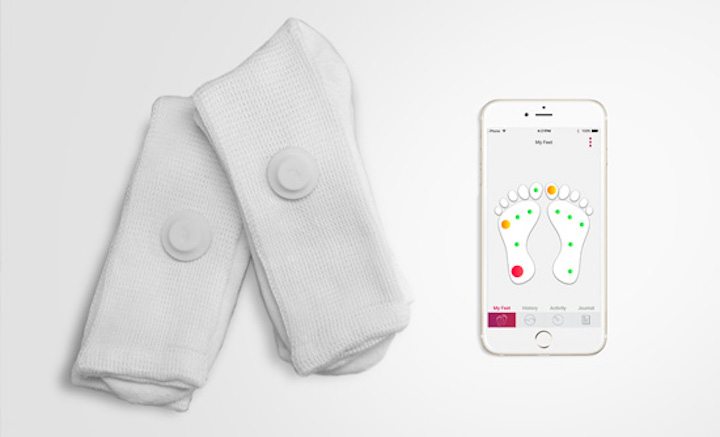
Siren Care‘s real-time temperature sensing smart sock is meant to detect foot inflammation in diabetics.  The goal is early notification to prevent (difficult to heal) sores and other symptoms of the disease, which can lead to extreme complications.

Data is stored in the fabric  and in the cloud.  An app sends alerts when a temperature event occurs. The washable sock is meant to last for 6 months, as is its battery, which does not require charging.


ApplySci’s 6th   Wearable Tech + Digital Health + NeuroTech Silicon Valley  –  February 7-8 2017 @ Stanford   |   Featuring:   Vinod Khosla – Tom Insel – Zhenan Bao – Phillip Alvelda – Nathan Intrator – John Rogers – Roozbeh Ghaffari –Tarun Wadhwa – Eythor Bender – Unity Stoakes – Mounir Zok – Krishna Shenoy – Karl Deisseroth – Shahin Farshchi – Casper de Clercq – Mary Lou Jepsen – Vivek Wadhwa – Dirk Schapeler – Miguel Nicolelis
ApplySci is delighted to welcome the Bayer LifeScience iHUB as a sponsor of Digital Health + NeuroTech at Stanford.

Categories
fitness Sensors Wearables

Wearable patch monitors lactate, glucose, and pH in sweat

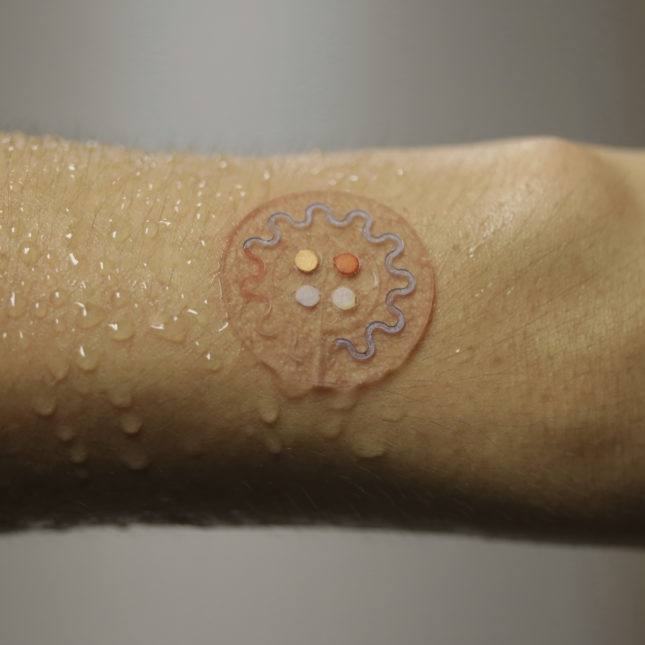
Northwestern’s John Rogers has developed a wearable, sweat analyzing patch.  The flexible microfluidic device uses colorimetric biochemical assays and integrates smartphone image capture analysis to monitor lactate, glucose, chloride ion concentrations, and pH.  The wearable, with sports, military, and disease monitoring applications,  can be adapted to test tears and saliva.

Professor Rogers will be a keynote speaker at Wearable Tech + Digital Health + NeuroTech Silicon Valley on February 7-8, 2017 at Stanford University — co-sponsored by the Stanford Wearable Electronics Initiative (e-WEAR).


ApplySci’s 6th   Wearable Tech + Digital Health + NeuroTech Silicon Valley  –  February 7-8 2017 @ Stanford   |   Featuring:   Vinod Khosla – Tom Insel – Zhenan Bao – Phillip Alvelda – Nathan Intrator – John Rogers – Roozbeh Ghaffari –Tarun Wadhwa – Eythor Bender – Unity Stoakes – Mounir Zok – Krishna Shenoy – Karl Deisseroth – Shahin Farshchi – Casper de Clercq – Mary Lou Jepsen – Vivek Wadhwa – Dirk Schapeler – Miguel Nicolelis
ApplySci is delighted to welcome the Bayer LifeScience iHUB as a sponsor of Digital Health + NeuroTech at Stanford.

Categories
Heart Sensors

Implanted sensors predict heart failure events

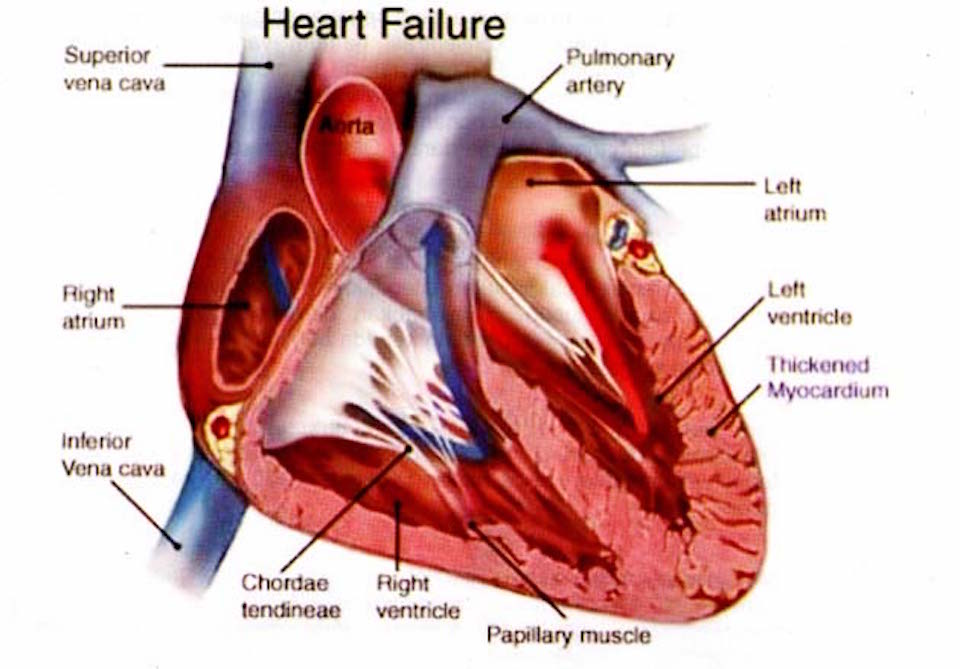
Penn State’s John Boehmer used Boston Scientific’s HeartLogic sensors (retrofitted in already implanted devices) to track heart failure in a study of 900 patients. The goal was continuous monitoring and early event detection and prevention.

Currently, heart failure is (not very successfully) managed by monitoring weight and reported symptoms.   One in five patients are readmitted within 30 days after being hospitalized for the condition.

The 900 patients were followed for one year. Software was uploaded to an implanted defibrillator, allowing it to act as sensors. Heart rate, activity, breathing, heart sounds and electrical activity in the chest were tracked.

70 percent of heart failure events were detected, usually more than a month before their occurance.  False positives were also reported,  which the researchers deemed to be in an ” acceptable range.”


ApplySci’s 6th   Wearable Tech + Digital Health + NeuroTech Silicon Valley  –  February 7-8 2017 @ Stanford   |   Featuring:   Vinod Khosla – Tom Insel – Zhenan Bao – Phillip Alvelda – Nathan Intrator – John Rogers – Mary Lou Jepsen – Vivek Wadhwa – Miguel Nicolelis – Roozbeh Ghaffari –Tarun Wadhwa – Eythor Bender – Unity Stoakes – Mounir Zok – Krishna Shenoy – Karl Deisseroth


Categories
Heart Sensors Wearables

Tiny sensor monitors the heart, recognizes speech, enables human-machine interfaces

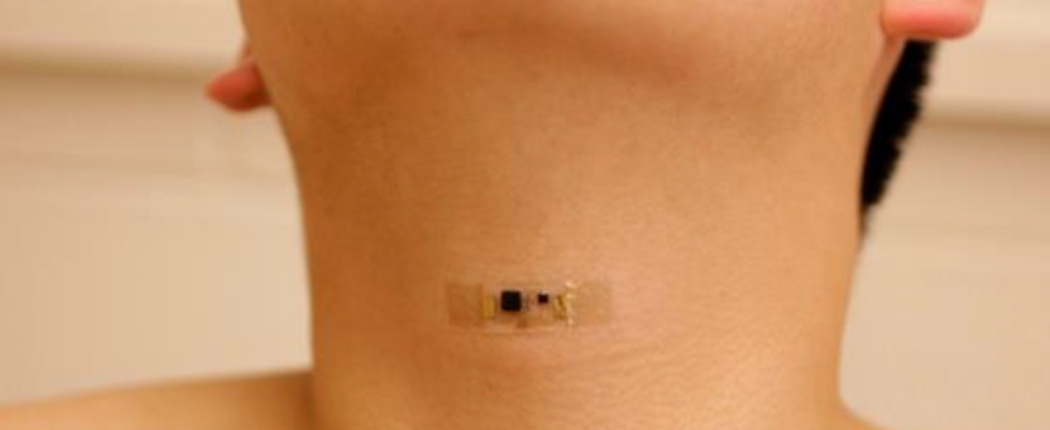
Northwestern professor John Rogers has released a paper detailing his latest tiny, wearable, flexible, highly accurate health sensor, which monitors the heart, recognizes speech, and can enable human-machine interfaces.  Professor Yonggang Huang is the corresponding author.

The soft, continuous monitor adheres to any part of the body, detecting mechanical waves that propagate through tissues and fluids in physiological activity — revealing acoustical signatures of individual events.  These include the opening and closing of heart valves, vocal cord vibration, and gastrointestinal tract movement.  ECG and EMG  electrodes can also be integrated.

Obvious practical applications include remote health monitoring, enabling seniors to age in place, and battlefield health and robot/drone control.  The vocal cord monitoring feature could also be used to assist the disabled communicate or control a keyboard.

ApplySci is honored to include Professor Rogers as a keynote speaker at Digital Health + NeuroTech Silicon Valley, on February 7-8, 2017, at Stanford University.


ApplySci’s 6th   Wearable Tech + Digital Health + NeuroTech Silicon Valley  –  February 7-8 2017 @ Stanford   |   Featuring:   Vinod Khosla – Tom Insel – Zhenan Bao – Phillip Alvelda – Nathan Intrator – John Rogers – Mary Lou Jepsen – Vivek Wadhwa – Miguel Nicolelis – Roozbeh Ghaffari –Tarun Wadhwa – Eythor Bender – Unity Stoakes – Mounir Zok – Krishna Shenoy – Karl Deisseroth

Registration rates increase today, November 18, 2016


Categories
BCI Brain

Implanted device enables slow, but more reliable, brain-driven typing

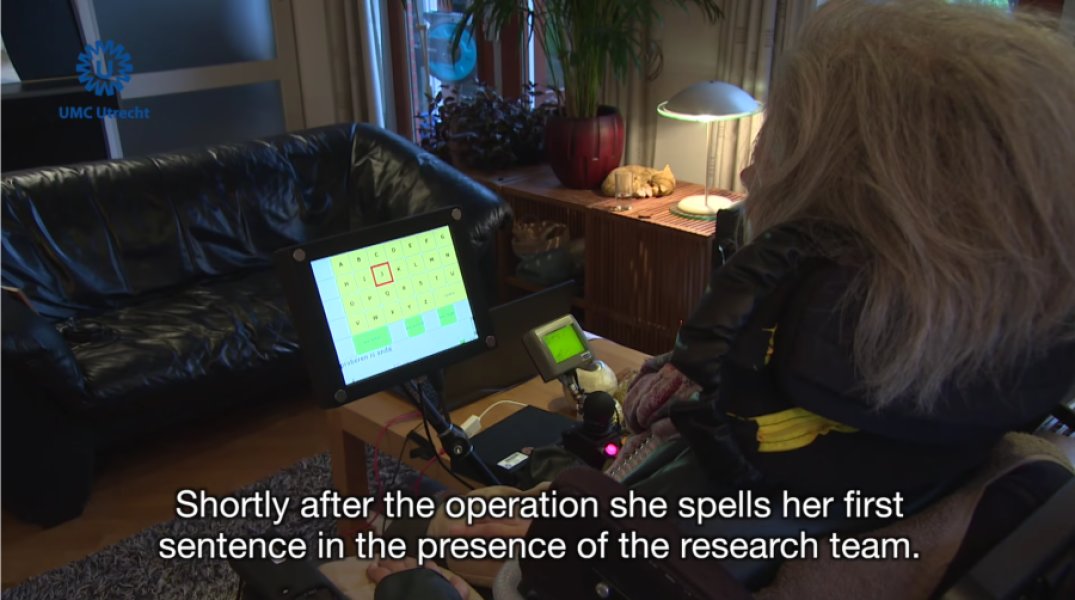
UMC Utrecht professor Nick Ramsey has developed an implantable brain computer interface that allowed a locked-in ALS patient to (very slowly) translate her thoughts into text.

Until recently, the patient used eye tracking to spell words on a computer screen, as many ALS patients do.  However, as 1/3 of patients lose the ability to control their eyes, scientists have been looking for thought controlled alternatives, both invasive, implant-driven, and non invasive, EEG-driven.

The success of this implant, while it only allows the user to “type” 2 letters per minute, is that it does not require the constant calibration of earlier devices, which required them to be used in the lab, or were unreliable.

Ramsey simplified the process by focusing on detecting only brain signals that fire when the brain counts backwards and commands the body to click a mouse.

Click to view UMC Utrecht video


ApplySci’s 6th   Wearable Tech + Digital Health + NeuroTech Silicon Valley  –  February 7-8 2017 @ Stanford   |   Featuring:   Vinod Khosla – Tom Insel – Zhenan Bao – Phillip Alvelda – Nathan Intrator – John Rogers – Mary Lou Jepsen – Vivek Wadhwa – Miguel Nicolelis – Roozbeh Ghaffari –Tarun Wadhwa – Eythor Bender – Unity Stoakes – Mounir Zok – Krishna Shenoy – Karl Deisseroth

Categories
Apps Heart

Voice analysis as a diagnostic tool

Beyond Verbal recently used its emotion-detecting voice analysis app in an attempt to predict coronary artery disease in 150 study participants, 120 of whom had presented for angiography.  The company claims to have identified 13 voice features  associated with CAD – and one associated with a 19-fold increase in its likelihood.

The researchers said that the voice indicator was strongest when a subject described a negative experience.  As this suggests an emotional connection to heart disease, could a neurotech wearable, that provides brain activity analysis, validate the process?  The company is already studying voice changes in Autism and Parkinson’s disease, but this was the first time they used their voice diagnostic tool in a non-brain disease study.


ApplySci’s 6th   Wearable Tech + Digital Health + NeuroTech Silicon Valley  –  February 7-8 2017 @ Stanford   |   Featuring:   Vinod Khosla – Tom Insel – Zhenan Bao – Phillip Alvelda – Nathan Intrator – John Rogers – Mary Lou Jepsen – Vivek Wadhwa – Miguel Nicolelis – Roozbeh Ghaffari –Tarun Wadhwa – Eythor Bender – Unity Stoakes – Mounir Zok – Krishna Shenoy – Karl Deisseroth

Registration rates increase Friday, November 18th

Categories
Conference

Science, not walls.

Reactionary politics must not deter our focus. On the future. On science. On technology. On healthcare. On progress. On our shared humanity.

It is my honor to gather the brilliant, for interdisciplinary exchanges about improving health, treating disease, and assisting the disabled. About enhancing life.  At our Digital Health + NeuroTech conferences at  Stanford and MIT.

Thank you to our speakers:  Phillip Alvelda, Zhenan Bao, Eythor Bender, Sky Christopherson, Casper de Clercq, Karl Deisseroth, Shahin Farshchi, Roozbeh Ghaffari, Tom Insel, Nathan Intrator, Mary Lou Jepsen, Vinod Khosla, Miguel Nicolelis, John Rogers, Krishna Shenoy, Unity Stoakes, Tarun Wadhwa, Vivek Wadhwa, and Mounir Zok.

You are the bright lights of our future.

Lisa Weiner Intrator, November 9, 2016

Categories
Digital Health

Virtual visits, digital second opinions, remote urgent care at NYC hospital system

NYP OnDemand is the system-wide telemedicine platform of NY Presbyterian Hospital, Columbia Doctors and Weill Cornell Medicine.  It includes virtual visits, digital second opinions, remote access to urgent care (for non life-threatening issues), and the ability for doctors to collaborate on patient cases.

Faster care and less crowded hospitals can of course improve the quality of life for New Yorkers. But in rural America and the developing world, similar systems could dramatically increase access to physicians.

Health technology as an equalizer in care, irrespective of wealth and location, will be a focus of the Wearable Tech + Digital Health + NeuroTech Silicon Valley conference at Stanford University this February.


ApplySci’s 6th   Wearable Tech + Digital Health + NeuroTech Silicon Valley  –  February 7-8 2017 @ Stanford   |   Featuring:   Vinod Khosla – Tom Insel – Zhenan Bao – Phillip Alvelda – Nathan Intrator – John Rogers – Mary Lou Jepsen – Vivek Wadhwa – Miguel Nicolelis – Roozbeh Ghaffari –Tarun Wadhwa – Eythor Bender – Unity Stoakes – Mounir Zok – Krishna Shenoy – Karl Deisseroth

Categories
Autism Wearables

Neurofeedback to suppress delta frequencies in autism

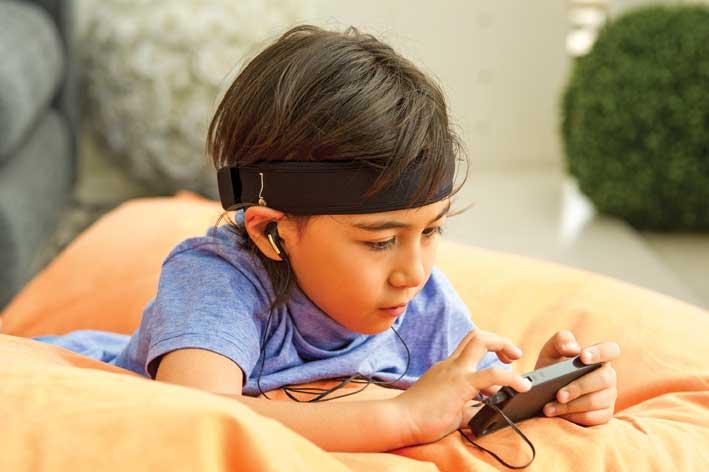
Mente is a neurofeedback system for autistic kids that creates personalized binaural beats, to suppress excessive delta frequencies, using auditory pathways in the brain.

Delta waves are typically associated with sleep and closed eyes, but autistic people experience high delta wave frequencies while awake. This  could be attributed to a feeling of isolation.

The company claims that Mente training should begin between ages 3 and 12, and that positive effects can be seen after 4 to 8 weeks of daily 40-minute  sessions.  The goal is enhanced concentration and communication.


ApplySci’s 6th   Wearable Tech + Digital Health + NeuroTech Silicon Valley  –  February 7-8 2017 @ Stanford   |   Featuring:   Vinod Khosla – Tom Insel – Zhenan Bao – Phillip Alvelda – Nathan Intrator – John Rogers – Mary Lou Jepsen – Vivek Wadhwa – Miguel Nicolelis – Roozbeh Ghaffari –Tarun Wadhwa – Eythor Bender – Unity Stoakes – Mounir Zok – Krishna Shenoy – Karl Deisseroth

Categories
Apps

Curated, enterprise-wide, health app prescription system

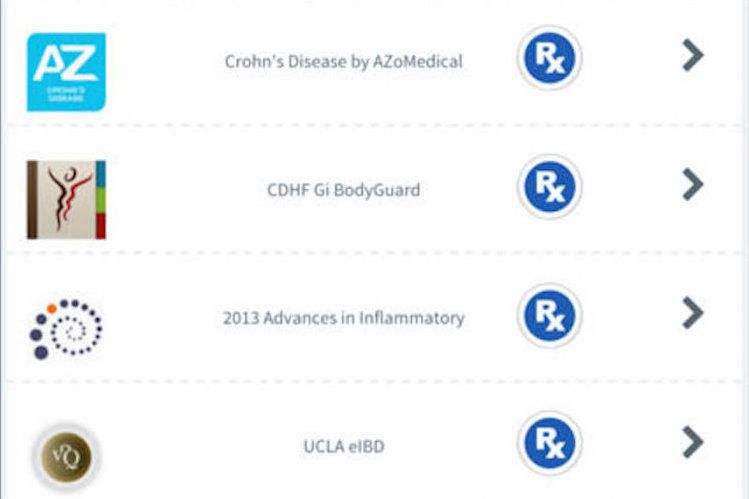
Mount Sinai Health System (with 7,100 physicians) has launched RxUniverse, an enterprise wide, curated app prescription system. Included apps have have been evaluated based on published evidence, to help physicians utilize digital health solutions, with an increased level of safety.

A pilot platform was launched throughout five clinical areas at Mount Sinai earlier this year.  Physicians have since prescribed 2,000 apps.  Their startup company, Responsive Health,  will license RxUniverse to other health systems.

RxUniverse was developed in the Sinai App Lab, under the direction of Ashish Atreja.  Integrating the latest consumer medical and lifestyle apps throughout such an enormous system is no easy task — and ApplySci applauds Mt Sinai for its vision of delivering healthcare in an integrated, efficient, vetted, and patient-friendly manner.


ApplySci’s 6th   Wearable Tech + Digital Health + NeuroTech Silicon Valley  –  February 7-8 2017 @ Stanford   |   Featuring:   Vinod Khosla – Tom Insel – Zhenan Bao – Phillip Alvelda – Nathan Intrator – John Rogers – Mary Lou Jepsen – Vivek Wadhwa – Miguel Nicolelis – Roozbeh Ghaffari –Tarun Wadhwa – Eythor Bender – Unity Stoakes – Mounir Zok – Krishna Shenoy – Karl Deisseroth